
Breaker Keeps Tripping? 6 Common Causes in Acadiana Homes
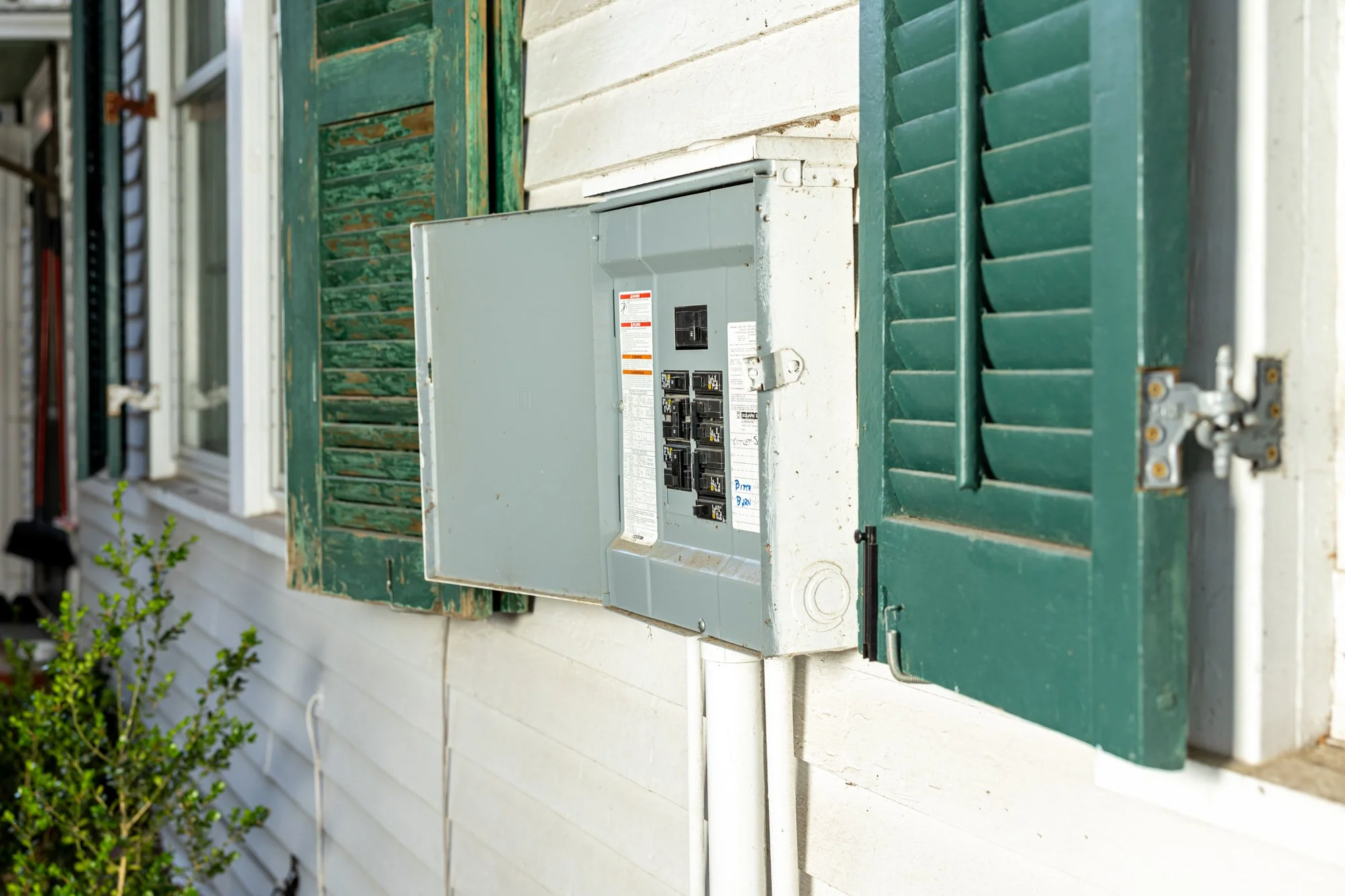
A breaker that trips once is doing exactly what it was designed to do. A breaker that trips again as soon as you reset it, or trips on the same circuit every few days, is reporting a problem that will not go away on its own. The good news is that four of the six causes below are things you can narrow down in about ten minutes without any tools. The other two need a licensed electrician, and knowing which is which saves you a service call or gets you one before something gets damaged.
First, reset it correctly. Push the breaker all the way to OFF, then firmly back to ON. A tripped breaker often sits in a middle position that looks close enough to ON that people think they have reset it when they have not.
1. Too much on one circuit
This is the most common cause by a wide margin. A 15-amp circuit can carry about 1,440 watts continuously, and a 20-amp circuit about 1,920. A space heater alone can eat most of a 15-amp circuit. Add a hair dryer on the same run and it goes.
The tell is timing. If the breaker trips when you turn on a specific combination of things, and holds fine otherwise, it is an overload.
Older Acadiana homes make this worse because they were wired for a much smaller electrical load. A 1965 bedroom got one circuit for a lamp and a clock radio. Today it runs a window unit, a TV, a computer, and three chargers.
What to do: move high-draw appliances to different circuits. If you cannot, the real fix is a dedicated circuit for whatever keeps blowing it.
2. A short circuit
A short is a hot wire touching a neutral or a ground, which lets current take a shortcut. The breaker cuts instantly, every time, usually the moment you reset it.
Signs it is a short rather than an overload: it trips immediately with nothing plugged in, there is a scorch mark or a burning smell, or you heard a pop when it happened.
What to do: unplug everything on the circuit and reset once. If it still trips instantly, the fault is in the wiring or in a device. Leave the breaker off and call someone. Do not keep resetting it.
3. A ground fault
A ground fault is current escaping to ground, often through moisture. In our climate, humidity, storm water, and a garage that never fully dries out cause a lot of these. Outdoor outlets, garage circuits, and bathroom circuits are where we find them.
If the trip happens after rain, or every time you use a particular outdoor outlet, moisture is the likely culprit. Sometimes the box needs to dry and the cover needs replacing. Sometimes the wiring is damaged.
4. A failing appliance
Appliances break down internally before they break down visibly. A motor with worn windings, a heating element starting to fail, a compressor drawing more than it should. The appliance may still appear to run.
What to do: the unplug test sorts this fast. Unplug everything on the circuit, reset the breaker, then plug items back in one at a time and use each one normally. When the breaker goes, you have found it.
Water heater tripping its breaker
This one deserves its own mention because it comes up so often and it is almost never an overload. An electric water heater on a dedicated circuit that keeps tripping usually has a failed heating element, a bad thermostat, or moisture inside the element housing from a small leak. All three get worse. If your water heater is putting its breaker down, get it looked at rather than resetting it, because a leaking tank plus electricity is a combination worth taking seriously.
5. A worn-out breaker
Breakers are mechanical devices with a service life. After enough trips, or enough decades in a hot garage or on an exterior wall, the internal mechanism weakens and starts tripping below its rated load. A breaker that goes when the circuit is barely loaded, on a circuit with no other symptoms, is often just tired.
Some older panel brands also have known reliability problems, and a few had recalls. If your panel is original to a home built before the early 1980s, it is worth having someone identify it. Our post on signs your electrical panel needs an upgrade covers what to look for.
6. Loose or corroded connections
Wire terminations loosen over time through heating and cooling cycles. A loose connection creates resistance, resistance creates heat, and heat causes nuisance tripping. In coastal Acadiana, salt air also corrodes terminations in exterior panels and outdoor disconnects faster than most of the country.
This one has no DIY test and it is the cause most likely to cause damage if it is left. You cannot see it from outside the panel, and opening a live panel is not a homeowner job.
Sorting it out yourself in ten minutes
Run this before you call anyone:
Note exactly what was running when it tripped.
Unplug everything on that circuit.
Reset the breaker properly, OFF then ON.
If it holds with nothing plugged in, it is an overload or a bad appliance. Add items back one at a time.
If it trips instantly with nothing plugged in, stop. Leave it off and call an electrician.
When to stop and pick up the phone
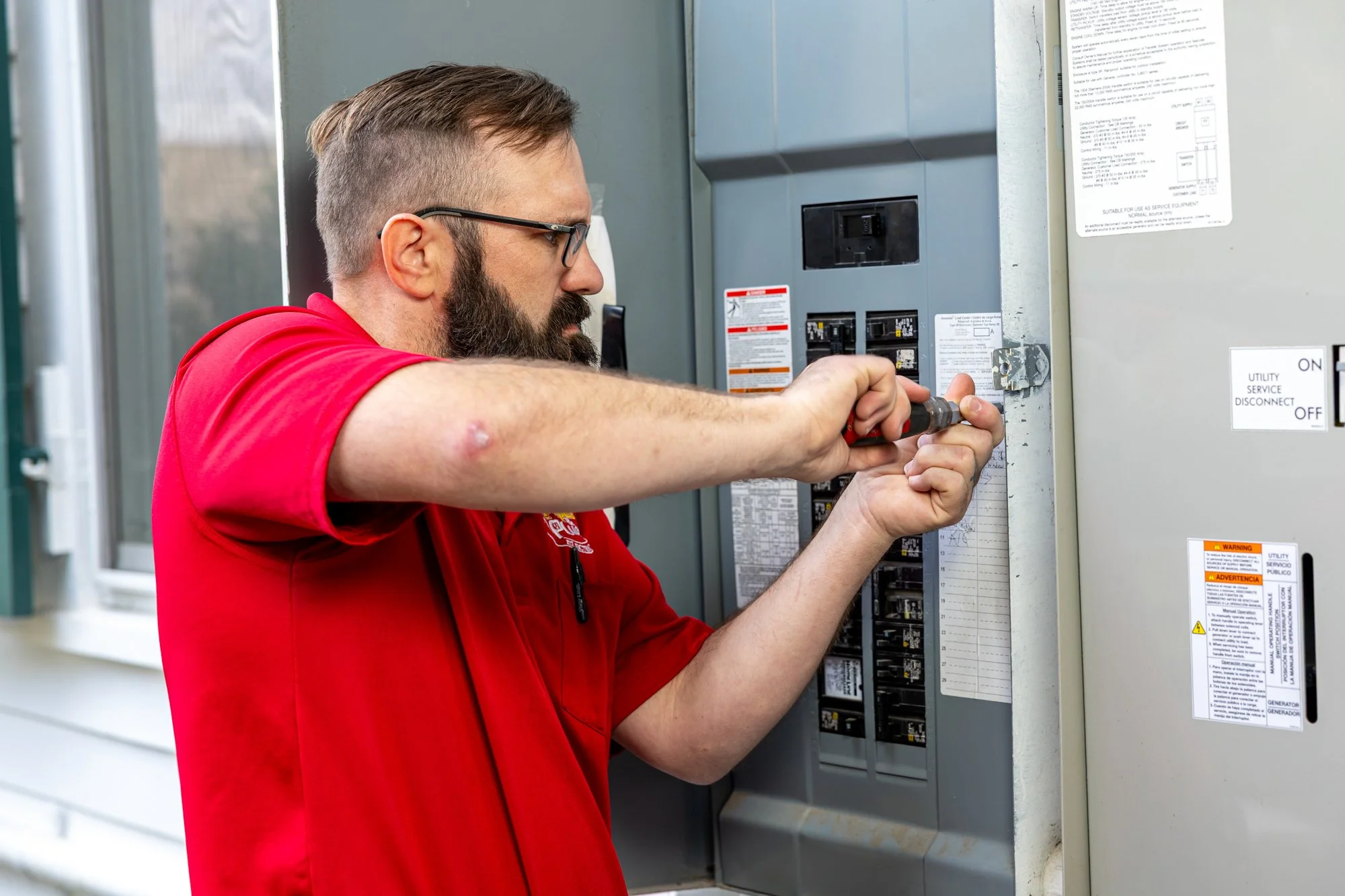
Call right away if any of these are true:
The breaker trips instantly with everything unplugged.
You smell burning, or the panel, a breaker, or an outlet feels warm.
There are scorch marks anywhere.
You hear buzzing or crackling from the panel.
Multiple breakers are tripping.
The main breaker is tripping.
You have already replaced the appliance and it still happens.
A tripping main breaker in particular is not a wait-and-see item.
What we do when we come out
We put a meter on the circuit under load to see what it is actually drawing, open the panel and check terminations for heat damage and looseness, test the breaker itself, and trace the circuit to find where the fault lives. Most calls end with a clear answer the same day: a bad breaker, a failed appliance, a damaged run, or a circuit that was never sized for what is on it.
If the answer is that your panel is out of capacity, we will say so, walk you through what an electrical panel upgrade involves, and give you a price. If the answer is a twenty-dollar breaker, that is what you get. Our electrical repair work carries a 5-year workmanship warranty on most jobs.
Frequently asked questions
Is it safe to keep resetting a breaker that keeps tripping?
No. The breaker is protecting the wire in your walls from overheating. Repeatedly overriding it removes that protection while the underlying fault is still there.
Can I just put in a bigger breaker?
No, and this is the most dangerous thing people try. The breaker is sized to the wire. Putting a 20-amp breaker on 14-gauge wire means the wire can overheat without the breaker ever tripping. That is how electrical fires start.
Why does my breaker only trip in summer?
Higher load. Air conditioning, window units, pool pumps, and dehumidifiers all run harder in Acadiana summers, and heat also lowers a breaker's tripping threshold slightly. A circuit that is marginal in January fails in July.
How much does it cost to fix a tripping breaker?
It depends entirely on the cause. Replacing a worn breaker is a small job. Adding a dedicated circuit is a bigger one. Tracing damaged wiring depends on where it is. We diagnose first, then quote, and the estimate is free.
Why does my breaker trip during a storm?
Usually moisture reaching an outdoor outlet, a damaged exterior fixture, or a power surge. If it happens every time it rains, something outside is letting water in.
Get an answer instead of a reset button
If you have reset the same breaker more than twice this month, something on that circuit needs attention. Call Pipes & Plugs at (337) 364-2980 or schedule your service online. A licensed electrician will find the real cause, explain what they found, and give you an upfront price with a free estimate. Serving New Iberia, Lafayette, and the surrounding Acadiana communities. Fixed right the first time.