
One Call, Two Trades: Why Acadiana Homeowners Use One Company for Plumbing and Electrical
Most people assume plumbing and electrical are separate problems handled by separate companies, and for a leaking faucet or a dead light switch they are.
But a surprising share of the work in a house sits right on the line between the two, and on those jobs having one company hold both licenses changes the schedule, the accountability, and usually the price. That is why we run licensed plumbers and licensed electricians out of the same shop across Lafayette, New Iberia, and the rest of Acadiana.
The jobs that need both trades

Here is where the two actually meet. If you have hired for any of these, you have probably felt the handoff.
Water heaters. An electric water heater needs a properly sized circuit and a disconnect. A gas unit needs a gas line and, on a tankless model, often a dedicated electrical circuit and venting. Replacing a water heater is routinely a two-trade job, and it is the one homeowners are most surprised by.
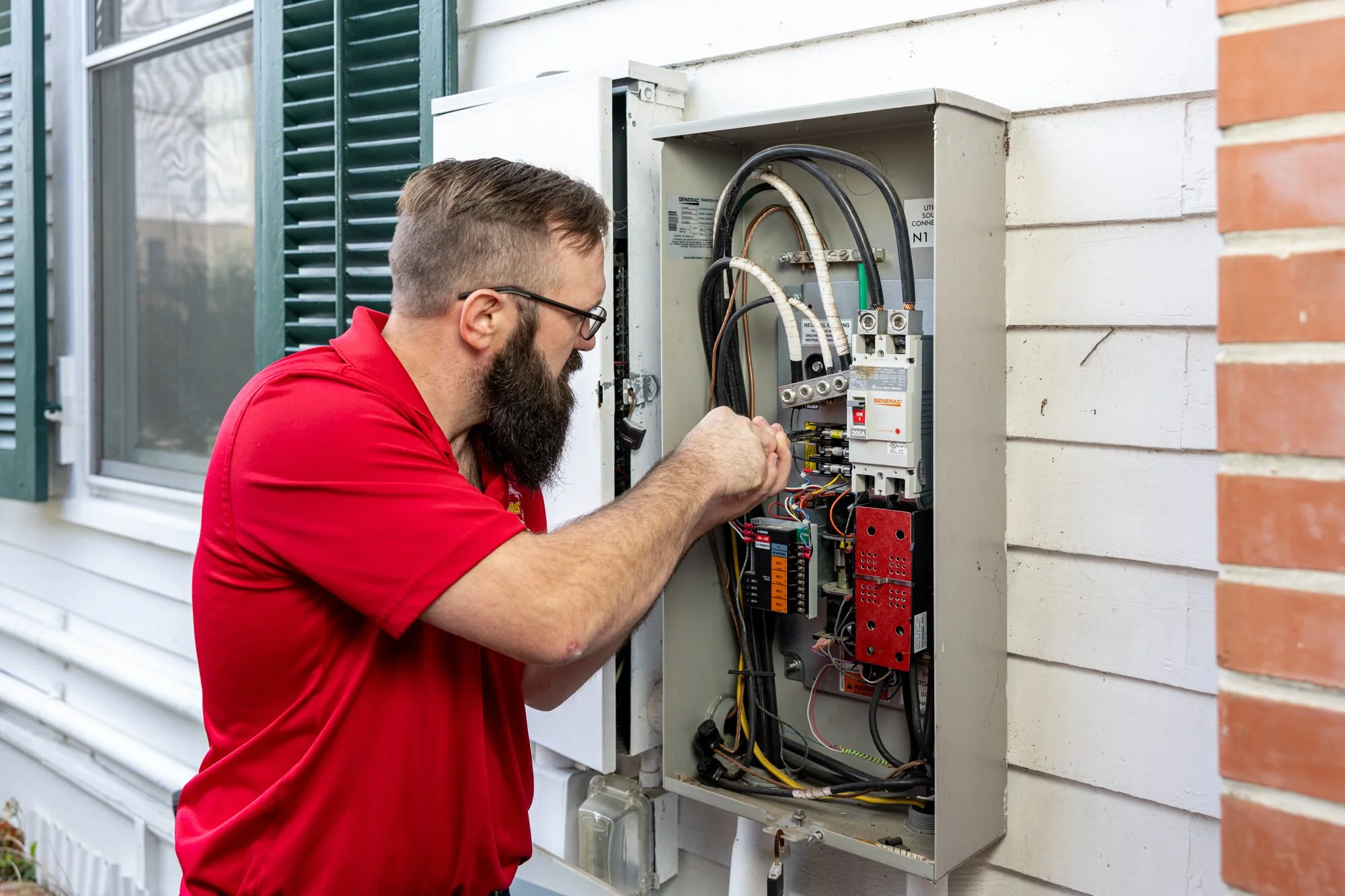
Standby generators. This is the clearest example. A whole-home standby unit needs a gas line run and sized correctly by a plumber, and a transfer switch tied into the panel by an electrician. Neither trade can finish alone. Coordinating two companies on a generator installation is where most of the delay in these projects comes from.
Garbage disposals. Plumbing under the sink, plus a switched circuit. Replacing one is usually simple. Adding one where there was never a disposal means both.
Kitchen and bathroom remodels. Moving a sink moves supply lines, drain lines, and the outlets and lighting around it. Code requires GFCI protection near water, dedicated circuits for certain appliances, and specific clearances. A remodel with a plumber and an electrician who do not talk to each other produces the classic result: a beautiful vanity with the outlet in the wrong place.
Well pumps, sump pumps, and irrigation. A pump is a plumbing device with an electrical supply. When one stops working, the first question is which side failed, and that question is a lot easier to answer when one company can test both.
Water leaks that hit electrical. A slab leak or a burst supply line near a wall with wiring in it is both an emergency plumbing call and an electrical safety call at the same time.
Additions and outbuildings. A shop, a mother-in-law suite, or an outdoor kitchen needs supply, drain, and power from the ground up.
The hidden cost of splitting the job
The problem with two companies is not that either one does bad work. It is the seams.
Two trip charges instead of one. Both companies bill for showing up. On a job where each is on site for two hours, that overhead is a real share of the total.
Scheduling that will not line up. The electrician can come Tuesday. The plumber can come Friday. Neither can start until the other finishes their part. A one-day job becomes a two-week project, and if either reschedules you start over.
Nobody owns the result. When the disposal leaks and the switch does not work, the plumber says it is the electrician's connection and the electrician says it is the plumber's install. You end up mediating between two contractors, and both are billing you to come back out.
Rework. The plumber sets the drain where he wants it. The electrician arrives to find the outlet location no longer works and has to move a box, which means opening drywall that was just closed.
Two sets of everything. Two estimates to compare, two contracts, two warranties with two different terms, two invoices, two companies to chase if something fails in six months.
None of that shows up on either quote, which is why splitting the job often looks cheaper on paper than it turns out to be.
What changes with one company
One estimate for the whole job. You see the real total before anyone starts, not the plumbing part with the electrical to be determined.
One schedule. The trades are sequenced internally. When the plumber finishes the gas line, the electrician is already on the calendar for the transfer switch, and neither is waiting on a stranger's dispatcher.
One warranty, one company to call. If anything on the job fails, there is no argument about whose part it was. Most of our work carries a 5-year workmanship warranty and it covers the job, not half of it.
People who already know your house. The tech who ran your generator gas line last spring is in the same system as the electrician who comes out when the transfer switch throws a code. Your history is one file.
Problems caught across trades. Our plumbers notice a water heater sitting on a circuit that is undersized. Our electricians notice moisture at a panel and ask where it is coming from. Neither would flag it if they only carried one license.
The honest limits
One company is not automatically the right answer for everything.
For a straightforward single-trade job, a specialist may be a fine choice, and a good specialist plumber is a good specialist plumber. What matters more than the number of licenses is whether the license is real, whether the technicians are background checked, and whether the company stands behind the work in writing. Ask any contractor for their license number, ask what the warranty covers and for how long, and ask whether the person doing the work is an employee or a subcontractor. Those three questions sort the field faster than anything else.
We hold Louisiana Plumbing Contractor license #42498 alongside our electrical licensing, our technicians are background checked and drug screened, and between the two trades our team carries more than forty years of combined local experience in Acadiana. Ask us those questions too.
Frequently asked questions
Is it more expensive to hire one company for both trades?
Usually the opposite, because you pay one trip charge and there is no rework at the seams. The line items are the same work either way, but the overhead is lower and the job finishes faster.
Do you really have licensed plumbers and licensed electricians on staff?
Yes. Both trades, employed by us, not subcontracted out. That is the whole model.
Can you do a job that only needs one trade?
Of course. Most of our calls are single-trade. The two-trade capability matters on the jobs that need it, and it costs you nothing on the jobs that do not.
What areas do you cover?
New Iberia, Lafayette, Broussard, Youngsville, Carencro, Scott, Abbeville, Maurice, Erath, Delcambre, St. Martinville, Breaux Bridge, Jeanerette, Franklin, and the surrounding Acadiana communities, from our two offices.
Do you handle commercial work as well as residential?
Yes, both trades, for homes and for local businesses.
One call handles it
If you are looking at a project that touches both water and power, or you are tired of coordinating two contractors who will not coordinate with each other, call Pipes & Plugs at (337) 364-2980 or schedule your service online. You will get one estimate, one crew, one schedule, and one company standing behind the whole job. Free, no-obligation estimates, upfront pricing, and a 5-year workmanship warranty on most repairs.