
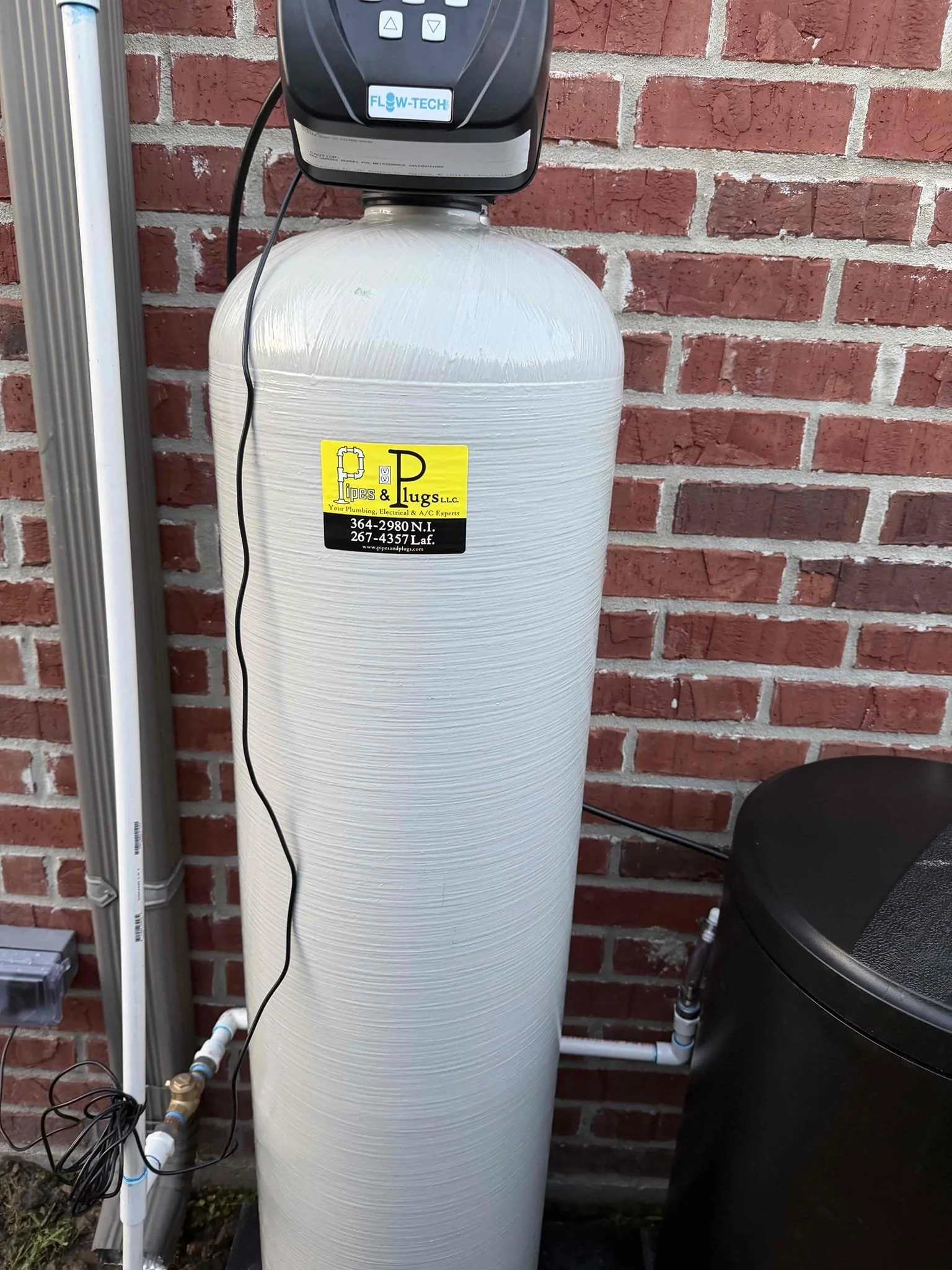
A water softener and a water filter solve different problems.
A softener removes the minerals that make water "hard," the ones that leave white crust on faucets and build up in your water heater.
A filter removes things like chlorine, sediment, and odors that affect taste and smell. If your problem is scale, you want a softener.
If it's taste, smell or sediment, you want a filter.
Plenty of homes need both. Our water filtration and softener systems page covers what we install. Here's how to figure out which one fits your house.
What a water softener does
A softener swaps out calcium and magnesium, the minerals behind hard water, using a process called ion exchange. Water passes through resin beads that hold onto those minerals and release a small amount of sodium (or potassium) instead. Every so often, the system rinses the beads with salt water to recharge them.
A softener helps with
White crust on faucets, shower heads and glass doors
Spots on dishes
Soap that won't lather well
Scale building up in your water heater, dishwasher and pipes
A softener doesn't remove chlorine, bad taste, odors, or most contaminants. Softened water can still smell like a swimming pool.
What a whole-house filter does
A whole-house filter treats all the water coming into your home. The most common type uses carbon to grab chlorine and the taste and smell that comes with it. Some systems add a sediment stage to catch sand and grit, or special media for iron or sulfur.
A filter helps with:
Chlorine taste and smell in city water
Rotten-egg smell, often from well water
Sediment, sand, or cloudy water
Rust-colored stains from iron
A filter doesn't soften water. If your problem is scale, a carbon filter won't stop it.
Quick comparison
Removes hardness minerals: Water Softener: Yes | Whole-House Filter: No
Removes chlorine taste and smell: Water Softener: No | Whole-House Filter: Yes
Removes sediment: Water Softener: Not well | Whole-House Filter: Yes, with a sediment stage
Protects water heater from scale: Water Softener: Yes | Whole-House Filter: No
Uses salt: Water Softener: Yes, most models | Whole-House Filter: No
Main upkeep: Water Softener: Add salt | Whole-House Filter: Change filters or media
Which problems are common in Acadiana?
It depends a lot on where your water comes from.
City water in Lafayette and New Iberia is treated, so chlorine taste and smell is a common complaint. Hardness varies by system.
Well water in the rural parts of Acadiana is a different story. Hardness, iron staining, and a sulfur smell all show up. If your water smells like rotten eggs, our post on why your water smells bad explains the usual causes.
That's why the first step is always the same: test the water. Guessing leads to buying the wrong system. If you'd like a plumber to look at what you're seeing and talk through options, schedule service or call (337) 364-2980.
When you need both
Many homes end up with a filter and a softener working together. The usual order is filter first, then softener. The filter takes out sediment and chlorine, which protects the softener's resin and helps it last longer.
You might need both if you see crust on your fixtures and your water tastes or smells off.
What about drinking water?
A whole-house system treats everything, including showers and laundry. Some families also add an under-sink filter at the kitchen tap for drinking and cooking water. It's a smaller, separate step and doesn't replace whole-house treatment.
Signs your current system isn't working
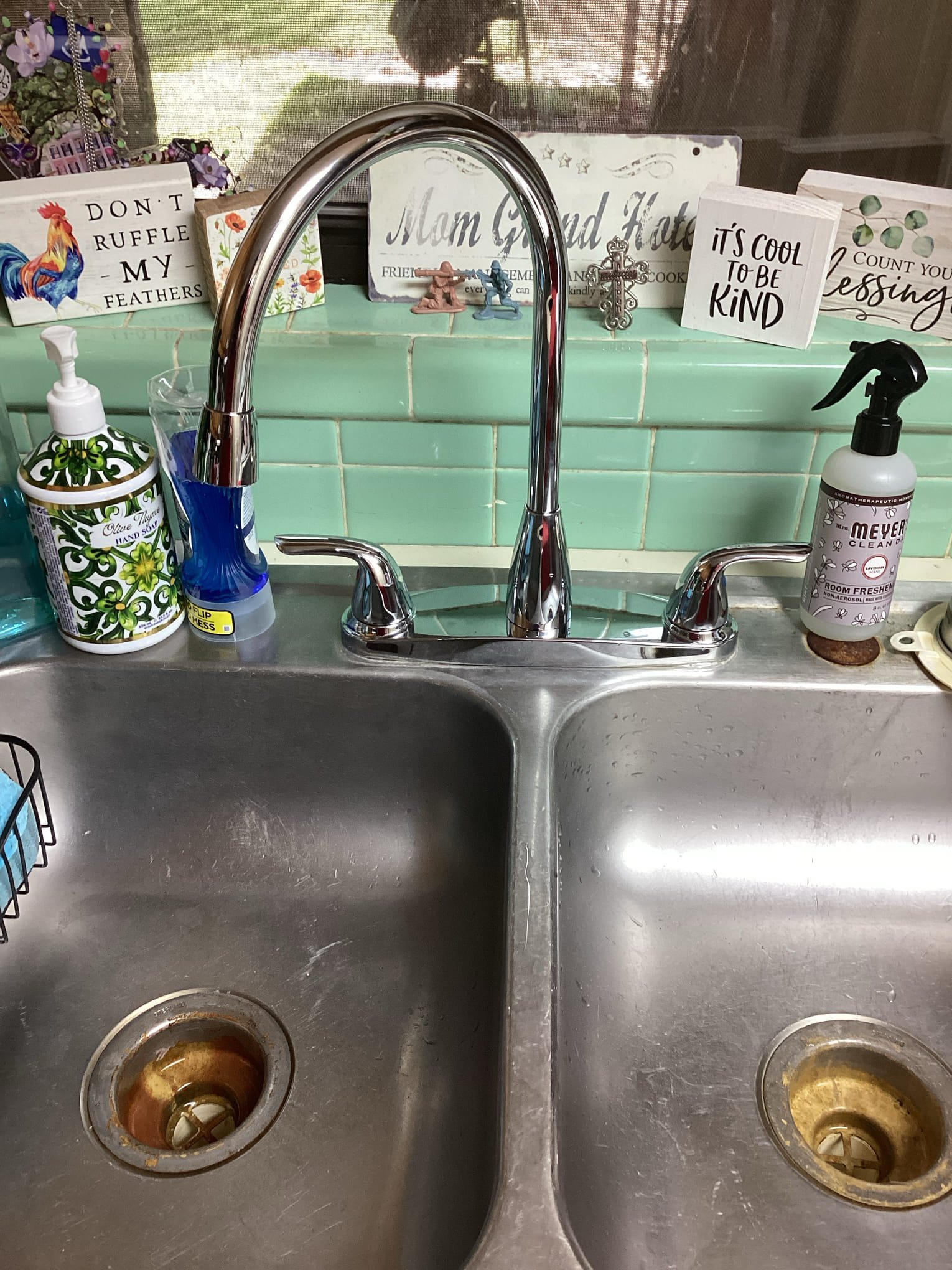
If you already have a softener or filter, watch for:
Crust coming back on faucets (softener out of salt or resin worn out)
Taste or smell returning (filter due for a change)
Low water pressure (clogged filter)
A salty taste (softener not rinsing right)
Is a softener worth it?
That's its own question, and we answered it in is a water softener worth it for Lafayette's hard water. One thing to know: hard water shortens the life of a water heater by filling the bottom of the tank with sediment, so a softener protects equipment you've already paid for.
Frequently asked questions
Does a water softener make water safe to drink?
Softened water is generally fine to drink, but a softener isn't a purifier. It removes hardness, not contaminants. If you're worried about what's in your water, get it tested and use a filter designed for that problem.
Will a softener add salt to my water?
It adds a small amount of sodium. If you're on a low-sodium diet, ask about potassium-based softeners or an under-sink filter for drinking water.
Can one system do both?
Some combination units exist, but most homes are better served by two systems sized for their water. A test tells you what you need.
How often do whole-house filters need changing?
It depends on the filter type and your water. Some cartridges need changing every few months; larger carbon tanks can go much longer.
Not sure what your water needs?
Start with what you're seeing: crust, smell, taste, or stains. A water test tells you the rest. Call Pipes & Plugs at (337) 364-2980 or schedule service, and a licensed plumber will tell you whether a softener, a filter, or both makes sense for your home. You'll see your options and the price before any work starts. Learn more about our water filtration systems and other plumbing services.