
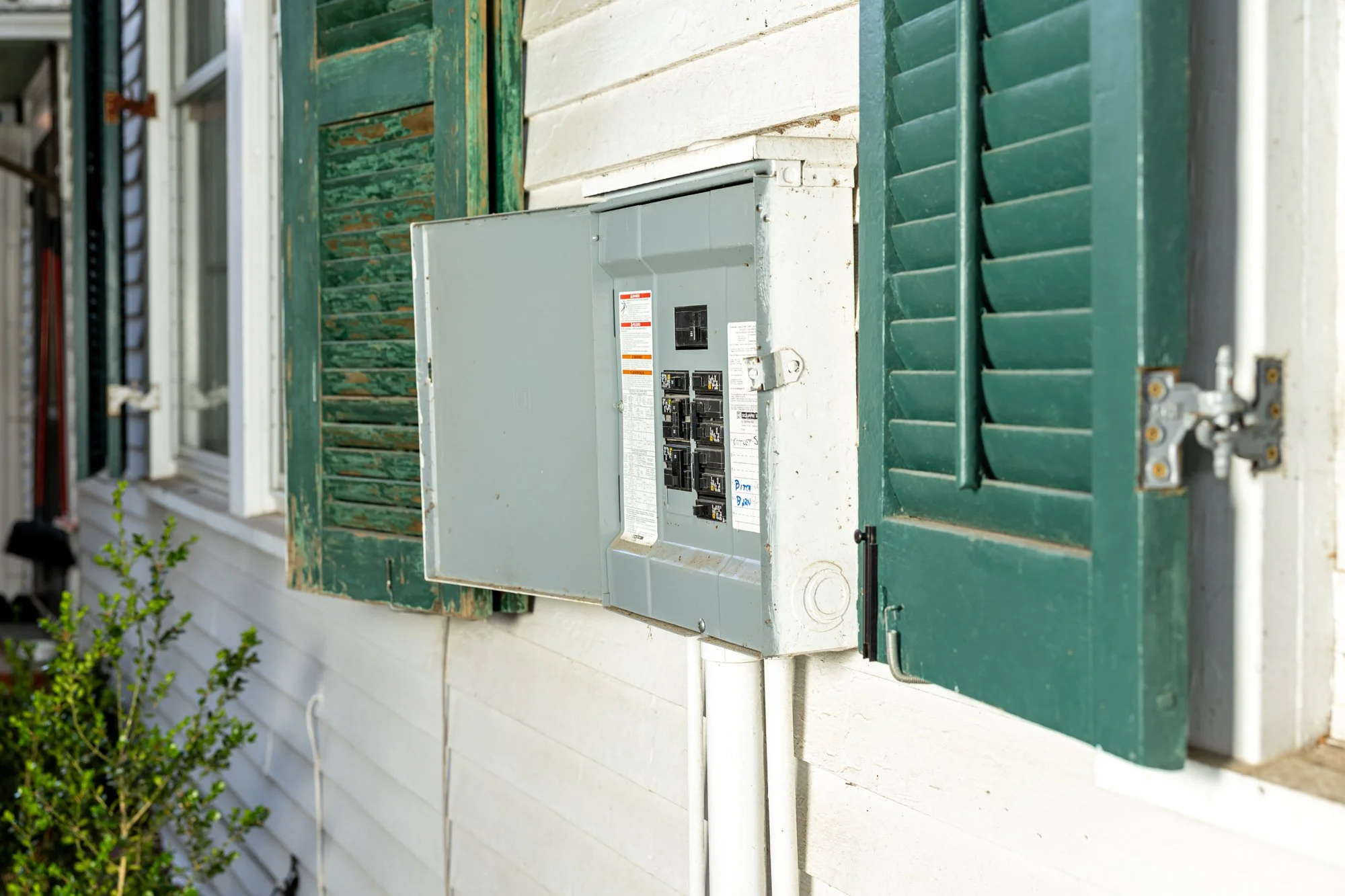
Sometimes, yes. A standby generator connects to your home through your electrical panel and a transfer switch.
If the panel is old, full, damaged, or a brand with known problems,
it usually needs to be fixed or replaced before the generator goes in.
If your panel is in good shape with room to work,
you may not need an electrical panel upgrade at all. Here's how to tell which camp you're in.
How a standby generator connects to your house
A standby generator sits outside on a pad and runs on natural gas or propane. When the power goes out, an automatic transfer switch does two things:
It disconnects your house from the utility lines.
It connects your house to the generator.
That first step matters. Without a transfer switch, generator power can flow back out onto the utility lines, which can hurt line workers trying to restore power. A transfer switch is required for a permanent generator.
The transfer switch either sits next to your main panel or is built into a new panel. Either way, your panel has to be in good enough condition to work with it.
Five signs your panel needs work first
1. It's a brand with a bad track record
Some older panels, especially Federal Pacific Stab-Lok and Zinsco, have known problems with breakers that don't trip when they should. They show up in plenty of mid-century homes around Lafayette and New Iberia. A panel like this should be replaced before a generator is tied in.
2. It's 100 amps and you want to back up the whole house
Many older homes have 100-amp service. A whole-house standby setup is usually designed around 200-amp service. You can still back up a 100-amp home, but if you're planning other upgrades too, it's often the right time to move to 200 amps.
3. There's no room left
If every slot is full and some breakers are doubled up, there may be no space for the generator breaker or the transfer switch connection.
4. Signs of heat, rust or damage
Scorch marks, a burning smell, rust from moisture, or breakers that feel warm all mean the panel needs attention whether you add a generator or not. Our post on signs your panel needs an upgrade covers more.
5. It's the original panel in an older home
A 40-year-old panel isn't automatically bad, but it deserves a close look before a new generator is connected to it.
When you probably don't need an upgrade
Your panel is likely fine if it's
200 amps,
a brand with a good record,
free of rust or heat damage, and
not packed full.
In that case, the job is mostly the generator, the transfer switch, and the gas line. Not sure which camp you're in? Have a licensed electrician look at your panel before you shop for a generator.
Whole-house or essential circuits?
You don't have to back up everything. Two common setups:
Whole-house backup means the generator powers the full panel. You need a generator big enough for your air conditioning, water heater and kitchen, plus a load management system that keeps big appliances from all starting at once.
Essential-circuit backup uses a smaller generator that powers only what you pick: refrigerator, a few lights, the gas furnace blower, a bedroom AC, the well pump. These circuits move to a separate sub-panel fed through the transfer switch.
The right answer depends on your house, your budget, and how long outages tend to last on your street. After a big storm in Acadiana, that can be days.
Don't forget the gas and the surge side
A standby generator needs a gas line big enough to feed it at full load, along with everything else in the house that burns gas. That's often a new line from the meter. Our guide to gas line installation for a generator explains why.
It's also smart to add whole-house surge protection while the panel is open. Storms and power coming back on can both send spikes through your wiring.
Why one company for all of it helps
A generator install touches three trades: electrical, gas, and sometimes the utility. When the electrician and the plumber who runs the gas line work for the same company, you get one plan, one schedule, and one price.
Pipes & Plugs is licensed for both plumbing and electrical work, license #42498.
We size the generator, check the panel, run the gas, and handle the permits. More on the generator side is on our standby generator installation page, and on choosing a standby generator for storm season.
Frequently asked questions
Can a generator be connected to a 100-amp panel?
Yes. Generators and transfer switches are made for 100-amp service. Whether it's the right move depends on the panel's condition and what you want to back up.
Is a transfer switch required?
For a permanently installed standby generator, yes. It keeps generator power from back-feeding onto utility lines.
Can the panel upgrade and generator install happen at the same time?
Often, yes. Doing them together means one permit process and one round of utility coordination, and less time with the power off.
What's a "generator ready" panel?
It's a panel with a built-in transfer switch or space and wiring set up for one. It can make a future generator install simpler.
Find out before you buy
If you're pricing standby generators, start with the panel. Call (337) 364-2980 or schedule service and a licensed electrician will check your panel, tell you if it needs an upgrade, and show you your options and the price before any work starts. There's no charge for us to come out and give you an estimate.