
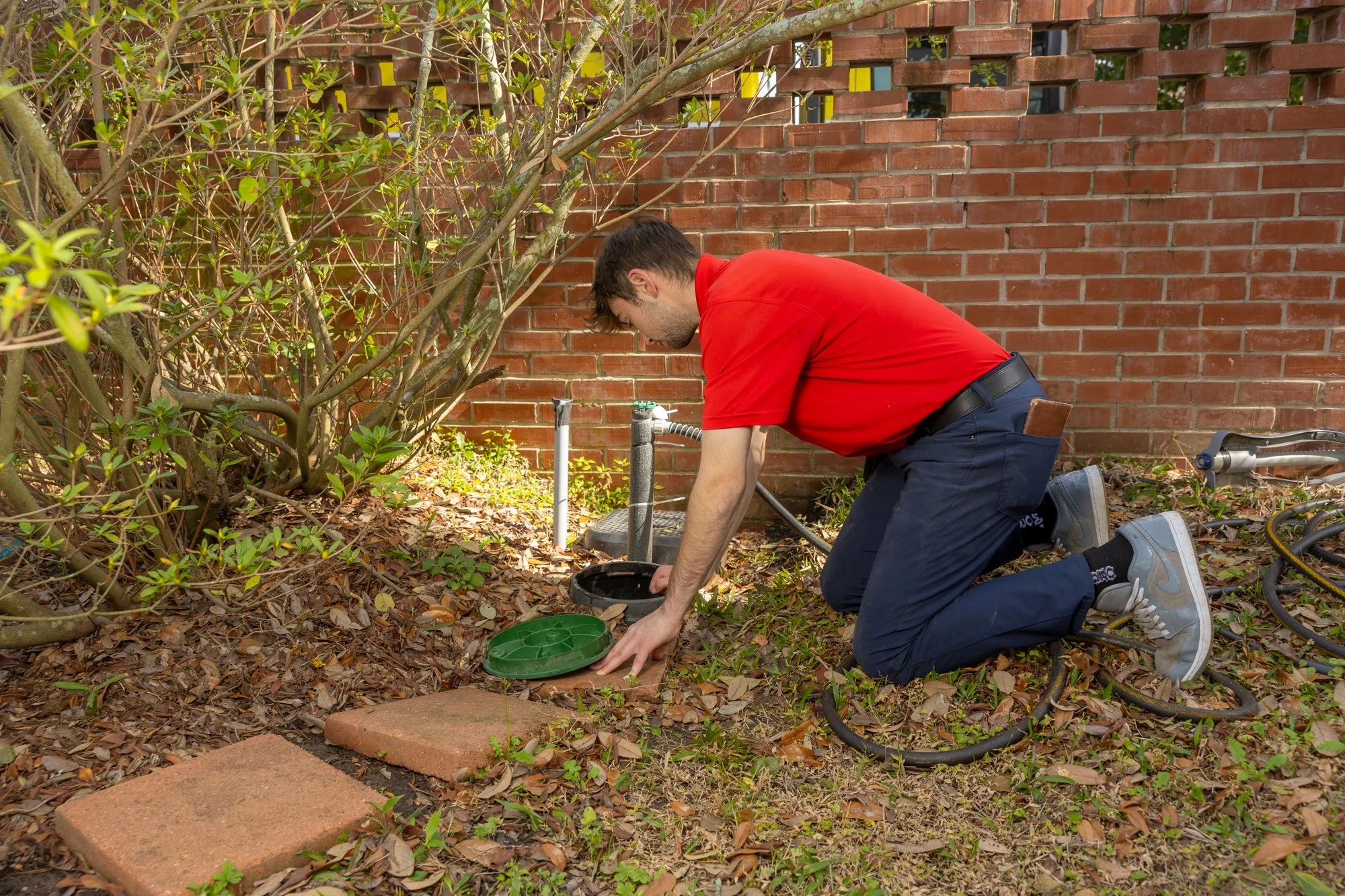
If the same drain keeps backing up no matter how many times it gets cleared, tree roots in the sewer line are the most likely reason. Roots find a hairline crack or a loose joint in the pipe, grow in toward the water, and slowly fill the line until waste cannot get past.
It does not fix itself and it does not stay the same. Our sewer line repair crews pull roots out of Acadiana sewer lines most weeks, and the homes it happens to have one thing in common: mature trees and pipe that was put in the ground decades ago.
Why older Acadiana homes get this more than newer ones
Two things stack up here. First, the pipe. Homes built before the mid-1970s around New Iberia and Lafayette were commonly plumbed with clay tile or cast iron, both of which sit in short sections with joints every few feet. Those joints are where roots get in. Newer homes on PVC have far fewer entry points.
Second, the trees. Live oaks, water oaks, and pecans are all over our older neighborhoods, and they put out wide, shallow, aggressive root systems. A sewer line is a warm, wet, nutrient-rich target sitting a few feet down. Roots will travel a surprising distance to reach one.
That combination is why a 1960s house with a big oak in the front yard is a completely different risk than a 2015 build on the same street.
Warning signs you have roots in the line
Roots rarely announce themselves all at once. The pattern builds over months.
The same drain clogs again and again
This is the clearest sign. A one-time clog is a clog. A clog that returns every few weeks or every few months in the same place means something is still in the pipe. Roots regrow after a snake cuts through them, so a clog that comes back on a schedule is close to a diagnosis on its own.
Gurgling toilets or drains
If your toilet burbles when the washing machine drains, or you hear air moving in the tub when you flush, air is getting trapped behind a partial blockage in the main line. That is a main-line problem, not a fixture problem.
More than one fixture backing up at once
When the tub and the toilet in the same bathroom act up together, the blockage is downstream of both. Roots in the main sewer line will do exactly this.
Slow drains all over the house
A single slow sink is usually local. Every drain in the house running slow points to the main line narrowing.
Wet patches or unusually green grass in the yard
A cracked sewer line leaks. The grass directly above it gets more water and more nutrients than the grass around it, so it grows faster and greener. If you have a strip of lawn that stays soft or thrives while the rest browns out, that is worth a look.
A sewage smell outside or in a bathroom
Roots crack pipe as they grow. Once the pipe is open, gas escapes. A persistent sewer smell is not something to air out and forget.
What happens if you leave it
Roots do not stop. They thicken, they trap grease and paper against themselves, and they widen the crack they came in through. A line that needed a cleaning this year can need a spot repair next year and a full replacement the year after. The backup also gets worse each time, and a sewage backup into the house is a health problem and a restoration bill on top of the plumbing bill.
The cost curve is the real argument for catching it early. Clearing roots is a service call. Replacing a collapsed section is excavation. If you want the numbers on the far end of that curve, our guide to sewer line replacement cost in Louisiana lays out both trenchless and traditional.
How we deal with it
There are two separate jobs here, and honest plumbers separate them.
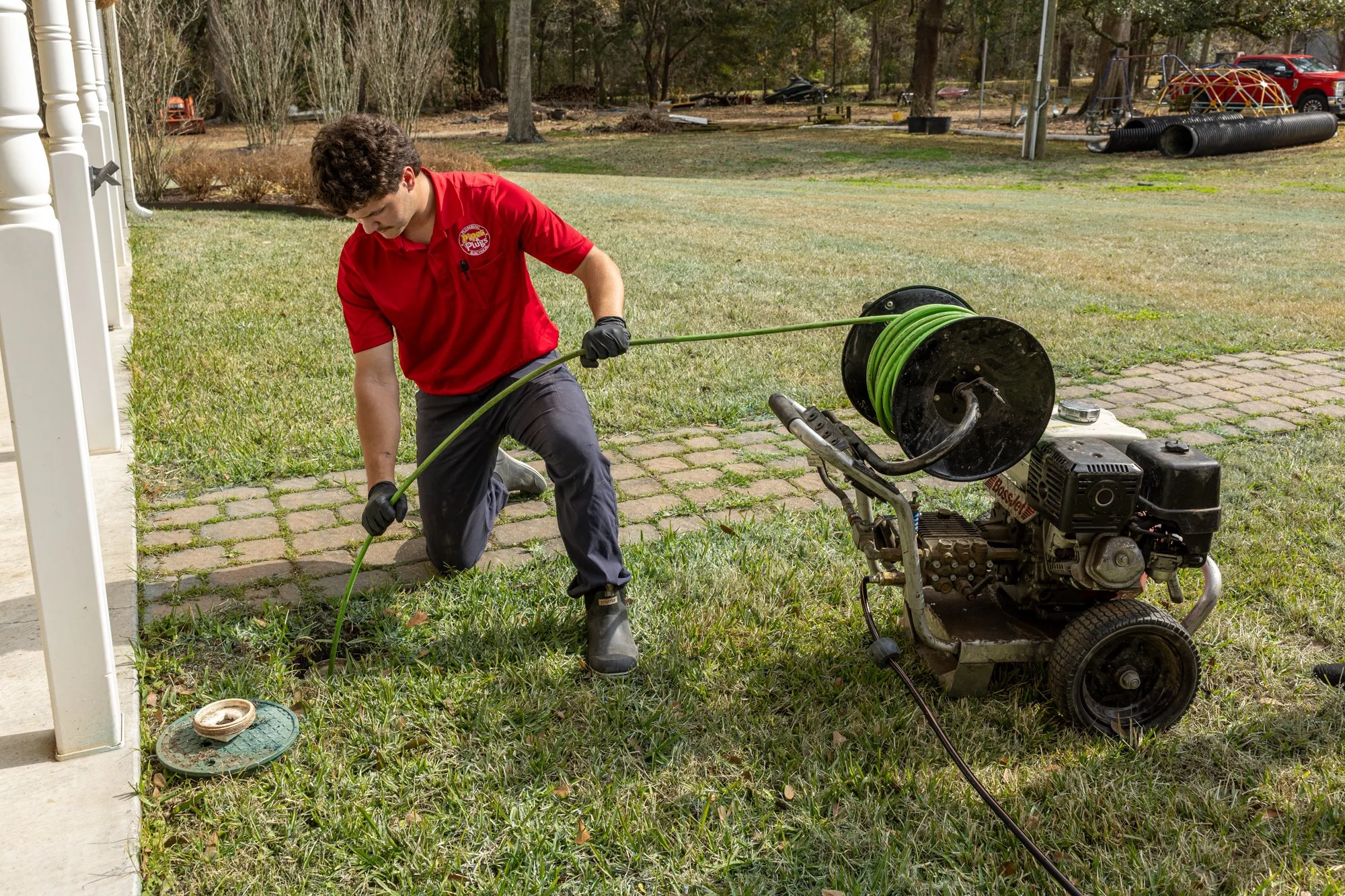
Clearing the roots. A cutting head on a drain machine shears the roots off inside the pipe and gets flow back. For heavy root mass and the grease that collects around it, hydro jetting scours the pipe walls properly rather than just punching a hole through the middle. Our drain cleaning team does both, and which one we use depends on what is in there.
Finding out why they got in. Clearing roots without looking at the pipe means you are booking the same call again next year. We put a camera down the line and see the actual condition: where the roots entered, whether the joint is separated, whether the pipe is cracked, bellied, or holding its shape. Then we tell you what we saw and what it will take to keep them out.
Sometimes the answer is a spot repair on one bad joint. Sometimes it is lining or replacing a run of pipe, and trenchless sewer repair can often do that without tearing up the yard the tree is standing in. Sometimes, on a line that is otherwise sound, the answer is periodic maintenance and keeping an eye on it. We will tell you which one you are looking at instead of selling you the biggest option.
What does not work
Store-bought root killer. Foaming root products can slow regrowth in a line that is already clear. They will not open a blocked line, and they do nothing about the crack the roots came through. They treat the symptom.
Cutting down the tree. People ask this often. Removing the tree stops new growth, but the roots already in the pipe stay there and rot, and you still have a cracked pipe. It is a big expense that does not solve the plumbing problem.
Waiting for it to get bad enough to be obvious. By the time it is obvious, it is usually a backup on a weekend.
Frequently asked questions
How do I know it is roots and not just a normal clog?
Recurrence is the tell. Grease and paper clogs clear and stay clear. Root clogs come back. If you have cleared the same line more than once in a year and there are mature trees near the sewer run, roots are the first thing to check.
Can you see roots without digging?
Yes. A sewer camera goes in through the cleanout and shows the inside of the pipe on a screen. No excavation to find the problem, and you see what we see.
Will homeowners insurance cover it?
Usually not for the pipe itself, since root intrusion is treated as gradual wear rather than a sudden event. Some policies cover water damage inside the home from a resulting backup, and some carriers sell a separate service-line endorsement. Check your policy or ask your agent, because it varies a lot.
How often do roots come back after clearing?
It depends on how open the pipe is and how aggressive the tree is. On a line with one small entry point, a good clearing can hold for a few years. On a line with separated joints, it can be back within months. The camera inspection is what tells you which situation you are in.
Do I need to replace the whole line?
Often no. Many root problems live at one or two bad joints, and a spot repair handles it. We only recommend a full replacement when the camera shows the line is failing along its length.
Get the line looked at before the next backup
If a drain in your home keeps clogging and you have big trees in the yard, stop paying to clear the same pipe. Call Pipes & Plugs at (337) 364-2980 or schedule your service online. A licensed plumber will camera the line, tell you exactly what is in there, and give you a clear price with a free estimate. Most of our repairs carry a 5-year workmanship warranty. We serve Lafayette, New Iberia, and the surrounding Acadiana communities, and we will get it fixed right the first time.