
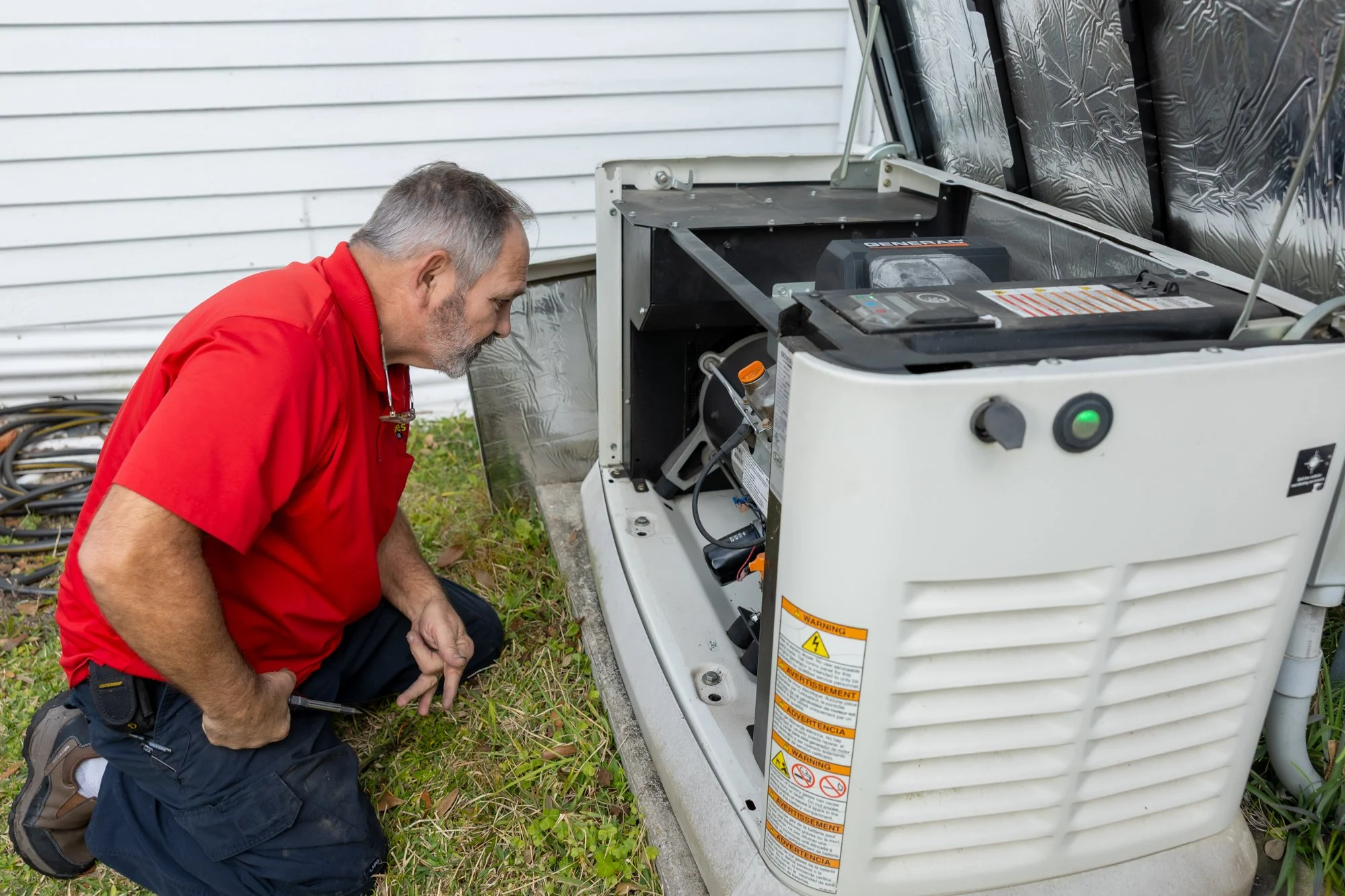
The honest answer depends on one question: what do you need to keep running, and for how long? A portable generator will keep a refrigerator cold, run a few lamps, and charge phones for a weekend outage, and it costs a fraction of the alternative. A standby generator will run your whole house, including central air, for as long as the gas holds, and it starts itself while you are at work. Both are legitimate choices. Which one fits comes down to your budget, your medical and work needs, and how long the power tends to stay off where you live. Our generator installation team installs standby units and wires transfer switches for portables, so we have no reason to push you toward one.
The short comparison
Portable generator
- Rolls out of the garage when you need it, stored the rest of the year
- Runs on gasoline you buy and store, sometimes propane
- Typically powers a handful of circuits: fridge, a window unit, lights, phones, maybe a well pump
- You start it manually, refuel it every several hours, and shut it down to refuel
- Must run outdoors, well away from the house
- Lowest cost by a wide margin
Standby generator
- Permanently installed on a pad outside, wired into your panel
- Runs on natural gas or a propane tank, no refueling
- Sized to run most or all of the house, central air included
- Starts automatically within seconds of an outage, whether or not you are home
- Tests itself weekly, needs annual service
- Substantially higher cost, installed
What each one will and will not run
This is where people are most often surprised.
A portable in the common home-use size range will comfortably handle a refrigerator, a chest freezer, several lights, a television, phone and laptop charging, and a window air conditioner or a couple of fans. What it will not do is run central air conditioning. Central AC draws far more on startup than most portables can deliver. In an August outage in Acadiana, that is the difference between uncomfortable and genuinely unsafe for someone elderly or medically fragile.
A properly sized standby runs the whole house, central air included, and you often would not know the power was out except for the sound of the unit. Some homeowners choose a smaller standby that covers essential circuits only, which costs less and still starts itself automatically.
What each one takes to install
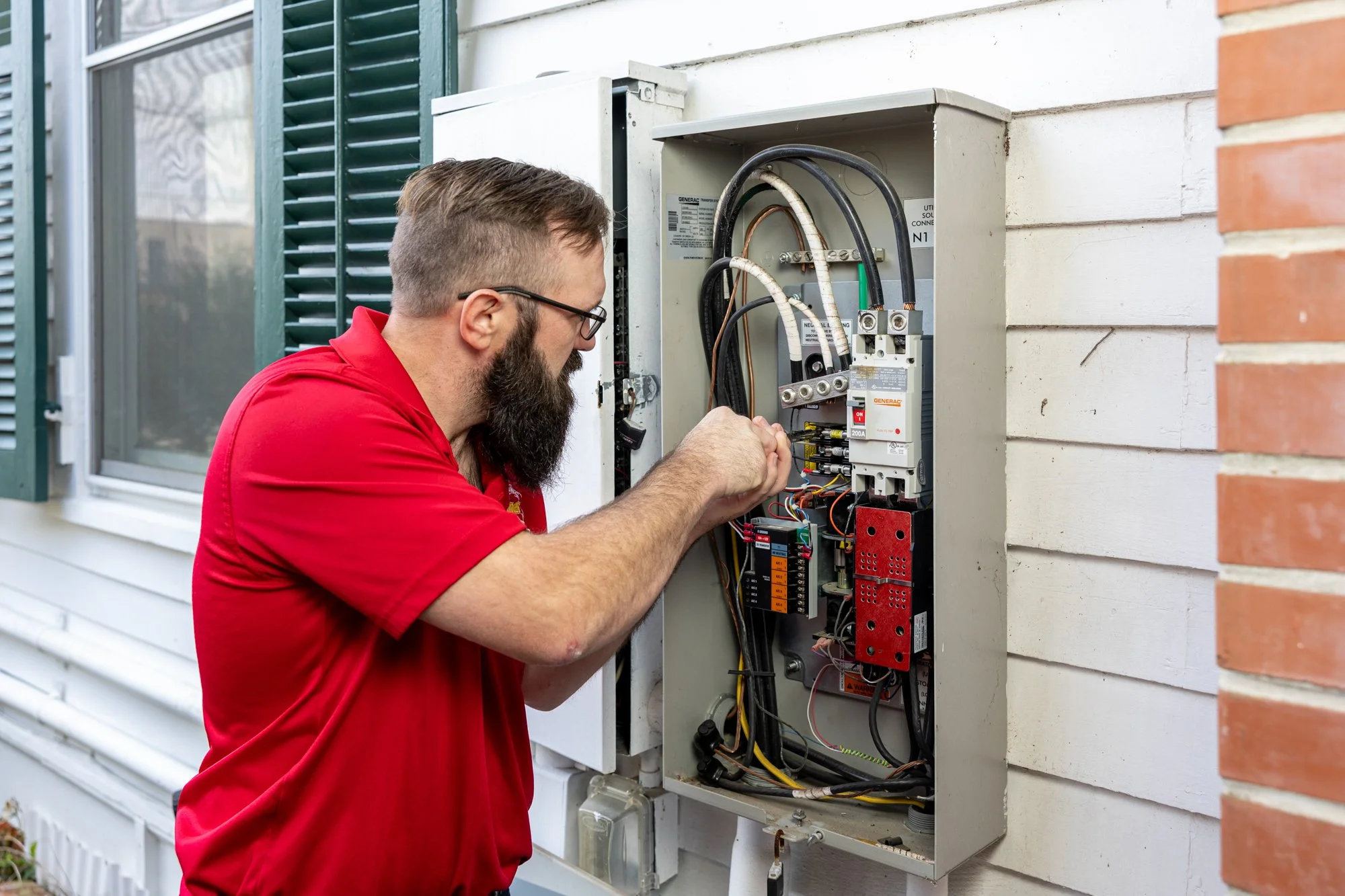
A portable is not plug-and-play if you want it done safely. Running extension cords from a portable into the house through a cracked window works, badly, and limits you to whatever you can reach with a cord. The proper setup is a manual transfer switch or an interlock kit installed at your panel by an electrician, which lets you energize selected circuits from a single inlet. That is a modest job and it is the single best upgrade a portable owner can make.
What you must never do is backfeed. Plugging a generator into a dryer outlet or any household receptacle to energize the panel sends power backward onto the utility line and can kill a lineman working to restore your service. It is illegal and it is the reason transfer switches exist. If someone offers to set you up that way, find someone else.
A standby is a two-trade project. It needs a level pad with proper clearance from the house, windows, and vents. It needs a gas line run and sized for the unit's demand, which is a plumbing job and where a lot of installs go wrong. It needs an automatic transfer switch wired into the panel, which is an electrician's job. It needs a permit and an inspection, and depending on the unit and your service, it can require a panel upgrade first.
That two-trade split is worth thinking about when you choose an installer. We run both licenses, so the gas line and the transfer switch are one job on one schedule with one company answering for the result.
Fuel, and why it matters here
Portables burn gasoline, and gasoline is the weak point. It has to be bought before the storm, when every station in the parish has a line and half are out. It has to be stored safely. It goes stale in a few months without stabilizer. And you have to refuel every several hours, which means getting up at 3 a.m. and shutting the unit down to do it.
Standby units run on natural gas from the utility line, which keeps flowing in most outages, or on a propane tank you already own. No cans, no lines, no midnight refueling. In the multi-day outages this region gets after a hurricane, that difference stops being a convenience and starts being the whole point.
Safety, which is not optional with either
Carbon monoxide from portable generators kills people after every major storm, and it is entirely preventable. Run a portable outdoors only, at least twenty feet from the house, with the exhaust pointed away from doors, windows, and vents. Never in a garage, never on a porch, never in a carport, not even with the door open. Put working CO alarms in the house.
Standby units vent outdoors by design and are placed to code clearances at installation, which removes most of that risk.
One more thing both owners should think about: a generator does not protect your electronics from the surge when utility power comes back. That is what whole-house surge protection is for, and it is a small add-on compared to replacing a TV, a computer, and an HVAC control board after a restoration spike.
Who should buy which
A portable makes sense if your outages are usually short, you can be home to run it, you mainly need to keep food cold and phones charged, and the budget is the deciding factor. Pair it with a properly installed interlock or transfer switch and you have a solid setup.
A standby makes sense if anyone in the house depends on powered medical equipment, you work from home and cannot lose connectivity, you are away often and cannot be there to start a portable, you have a well pump or a sump pump you cannot do without, you keep a full freezer, or you have simply been through enough multi-day Acadiana outages to be done with the extension cords.
There is no wrong answer here. There is a wrong install, on either one.
If you have decided on standby and want the sizing and brand detail, we go deeper in choosing a standby generator for Louisiana storm season.
Frequently asked questions
Can a portable generator run my central air?
Almost never. Central AC startup draw exceeds what typical home portables deliver. If keeping the house cool through an outage matters to you, that points to a standby.
How long can a standby generator run continuously?
On natural gas, effectively as long as the outage lasts, with a service check on a long run. On propane, until the tank runs down, which depends on tank size and load.
Do I need a permit to install a standby generator?
Yes. The gas and electrical work both require permits and inspection in our area. A contractor who suggests skipping that is a contractor to avoid.
Can I install a transfer switch myself for my portable?
It is panel work on live service. Louisiana requires licensed electrical work here for good reason, and it is not an expensive job to have done properly.
How often does a standby generator need service?
They self-test weekly on their own. Plan on annual professional service: oil, filters, battery, and a load test. Skipping it is how people find out the unit will not start on the day they need it.
Is a generator worth it if we only lose power once or twice a year?
Depends on how long those outages last and what is in your freezer. A weekend without power is an inconvenience. Five days in August with someone elderly in the house is a different calculation.
Talk it through before storm season, not during it
If you are weighing the two, call Pipes & Plugs at (337) 364-2980 or schedule your service online. A licensed technician will look at your panel, your gas service, and what you actually need to keep running, then give you an honest recommendation and a written price with a free estimate. We handle the gas line and the electrical under one roof, with a 5-year workmanship warranty on most work. Serving New Iberia, Lafayette, and the surrounding Acadiana communities.