
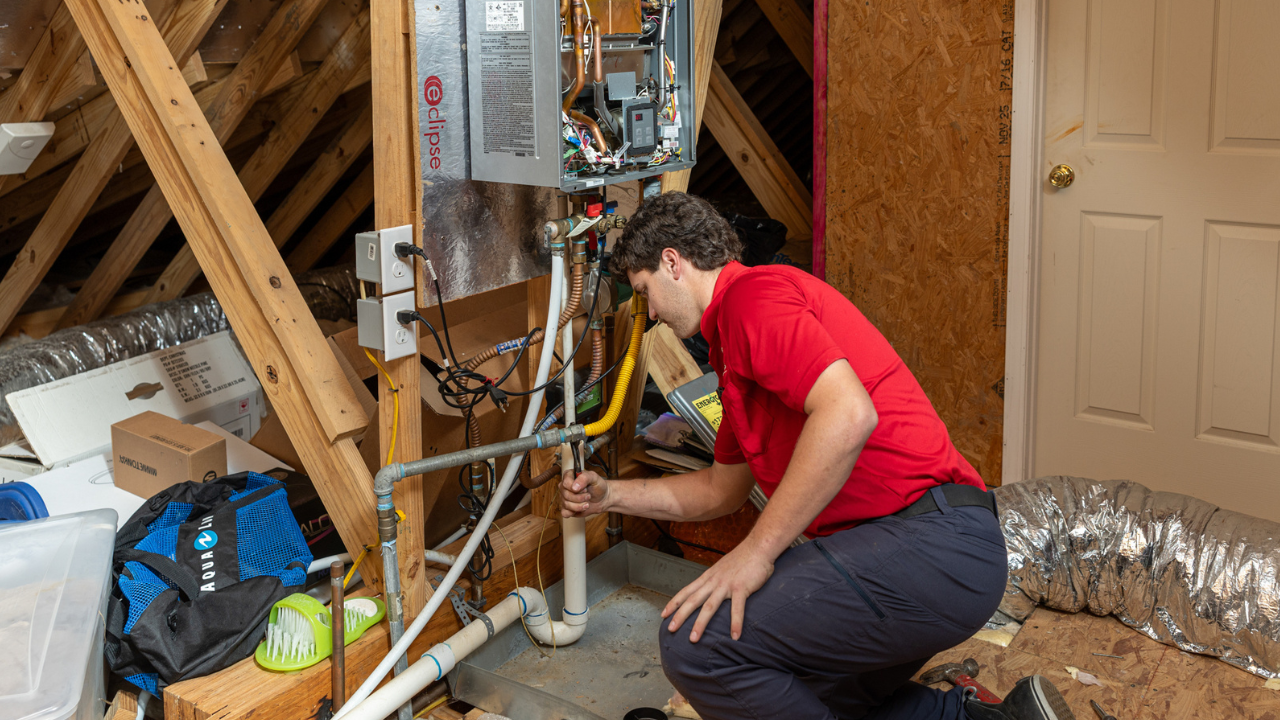
It's not your imagination. When the weather turns cool in Acadiana, the water coming into your house gets colder, so your water heater has to work harder to bring it up to temperature.
A heater that kept up fine in August can run short in January. Sometimes that's normal.
Sometimes it's a sign something inside the heater is failing.
Here's how to tell the difference, and when it's time to call our water heater repair team.
The short answer
Your water heater heats cold water to a set temperature. In summer, the water coming in from the street or your well is already warm. In the cooler months it's noticeably colder. That means:
Each gallon takes more energy to heat.
Showers use more hot water and less cold to feel the same.
The tank empties faster and takes longer to recover.
So a little less hot water in winter is expected. A big drop, or a sudden one, isn't.
Six reasons your hot water runs out sooner
1. Colder incoming water
This is the normal part. You'll notice it most in the coldest stretch, which around here is usually January. If the only change is that showers run a few minutes shorter, this is probably it.
2. Sediment in the bottom of the tank
Hard water leaves minerals that settle at the bottom of the tank. Over time that layer takes up space meant for water and insulates the water from the burner or lower element. The tank holds less hot water and heats slower. A rumbling or popping sound when it heats is the giveaway.
An annual flush helps. If your water is hard, a water softener or filtration system slows the buildup.
3. A failed lower heating element (electric heaters)
Most electric tank heaters have two elements. If the lower one burns out, the top one still heats a small amount of water near the top. You get a short burst of hot water, then lukewarm. It often shows up in winter because the heater is working harder.
4. A broken dip tube
The dip tube carries cold water to the bottom of the tank. If it cracks, cold water mixes in at the top, right where hot water leaves. Hot water goes lukewarm fast, and you may find bits of white plastic in faucet screens.
5. The thermostat is set too low or is failing
Some homes turn the temperature down in summer and forget to turn it back. About 120 degrees is a good setting for most families. Our guide on setting your water heater temperature explains why going much higher brings scalding risk. If the setting is right and the water is still lukewarm, the thermostat itself may be bad.
6. The heater is too small for the house now
Holiday guests, a new baby, a teenager who showers for half an hour. If your household changed, the tank you bought years ago may simply be too small. Winter makes that gap obvious.
What about tankless?
Tankless water heaters don't run out, but they have a flow limit. In winter, the unit has to raise colder water by more degrees, so it can deliver less hot water at once. Two showers and a dishwasher at the same time may come out lukewarm. Scale buildup inside the unit makes it worse, which is why tankless units need yearly descaling.
What you can check yourself
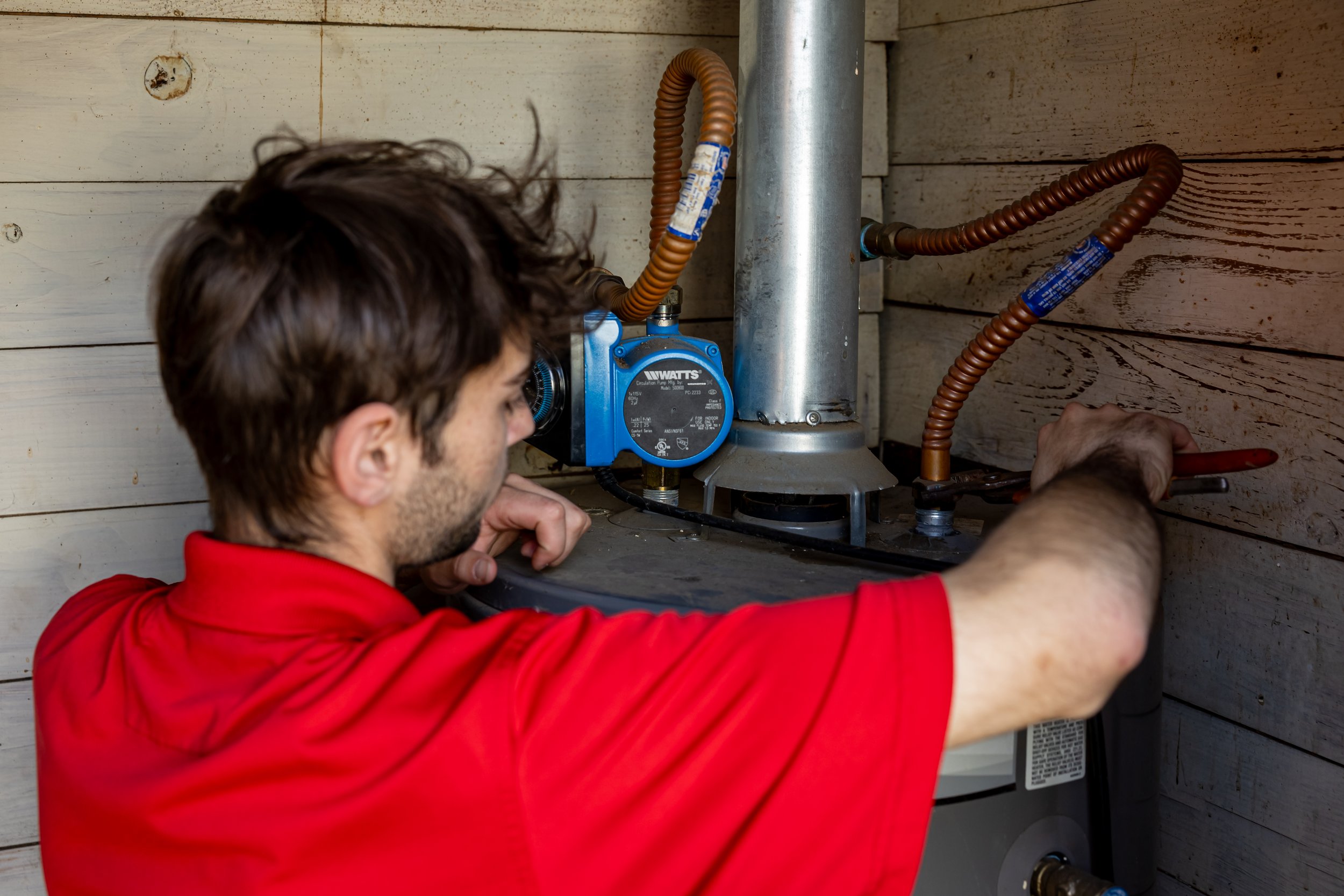
Check the temperature setting. On a gas heater it's the dial on the gas valve. On an electric heater it's behind access panels; turn the power off at the breaker before opening them.
Listen while it heats. Popping or rumbling means sediment.
Time it. If hot water used to last 15 minutes and now lasts 5, that's more than cold weather.
Look around the base. Rust or water around the bottom of the tank means it's time to talk about replacement.
If anything looks off, or you'd rather not open the panels, book a water heater check and a licensed plumber will find the cause.
When it's a repair and when it's a replacement
Elements, thermostats and dip tubes are usually repairable. A tank that's leaking, rusting, or over 10 to 12 years old usually isn't worth putting more money into. Our post on tank vs tankless and what drives the cost walks through that decision.
Frequently asked questions
Is it normal to get less hot water in winter?
A little less, yes, because the water coming in is colder. A big or sudden drop usually means sediment, a bad element, or a broken dip tube.
Should I just turn the temperature up?
A small bump can help, but don't go much past 120 to 125 degrees without a mixing valve. Higher settings raise the risk of scalding, especially for kids and older family members.
How often should I flush my water heater?
Once a year for most homes. Homes with hard water may need it more often. An annual flush is included with our VIP Protection membership.
Why is my electric water heater only giving me a few minutes of hot water?
The most common cause is a failed lower heating element. The top element still works, so you get a little hot water before it goes lukewarm.
Get your hot water back
If your showers are running cold sooner than they should, call Pipes & Plugs at (337) 364-2980 or book a visit online. A licensed plumber will find the cause and show you your options and the price before any work starts. If you want the yearly flush handled for you, ask about VIP Protection.